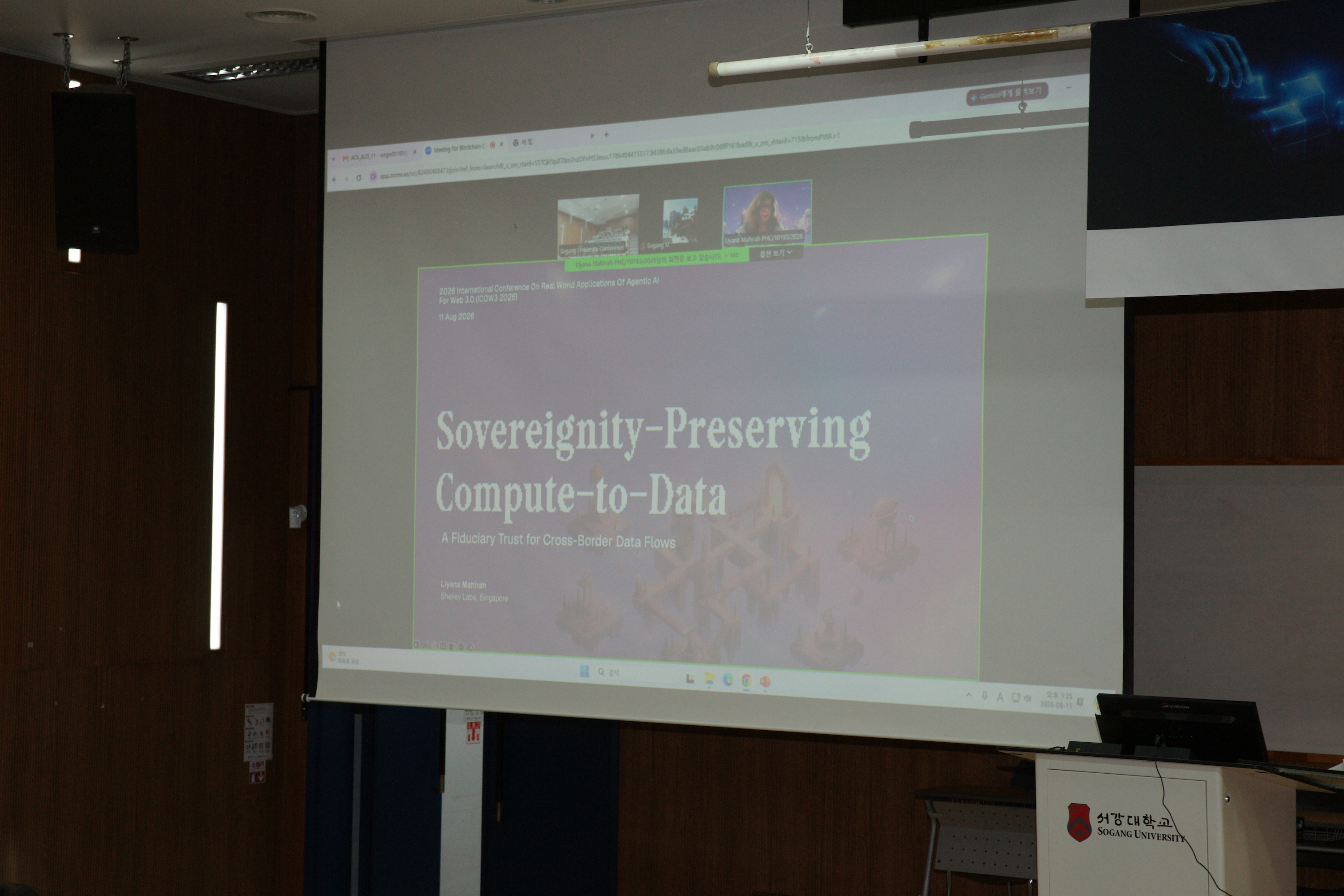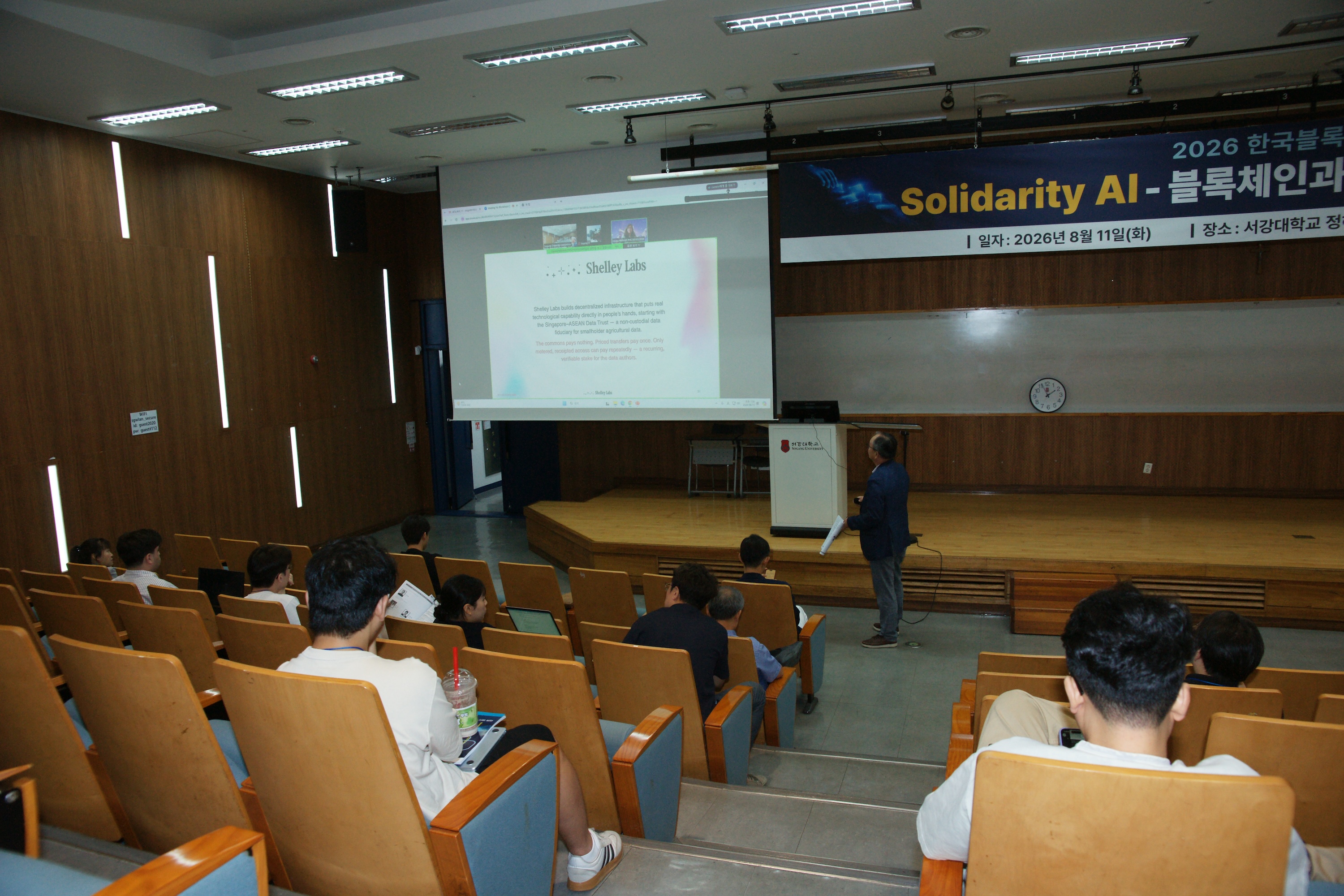

In August, I presented on behalf of Shelley Labs at the Korea Society of Blockchain’s 2026 academic conference, held under the theme Solidarity AI. We approached the growing policy debate around artificial intelligence from the data layer.
View the presentation slides here (access required).
As AI sovereignty becomes a larger policy concern, infrastructure sovereignty (control over compute) is often conflated with data sovereignty (agency over how data is processed). A country can localise its data in national silos while the people producing that valuable information still lack control over what gets computed from it. For communities like smallholder farmers, the prevailing architecture forces an unattractive choice: keep data siloed and limit its usefulness, or transfer it elsewhere and rely entirely on downstream contractual restrictions after the copy has been made.
The Shelley Data Trust (SDT) begins from a different premise: use should not require possession.
From Shared Data to Shared Execution
Most digital systems treat interoperability as movement, copying and exporting datasets to wherever the computation occurs. Agentic AI makes the weaknesses of that model obvious—machines query and combine information at a speed that makes contractual enforcement brittle.
The architecture presented by Shelley instead moves the computation. Raw data remains within the contributor’s local domain. A fiduciary institution determines which computations are permissible, and approved code is registered as an authorization state. An independent verifier checks what is running inside a hardware-isolated Trusted Execution Environment (TEE) before protected data is decrypted, ensuring only the permitted result leaves the node.
For the agricultural use case presented in Seoul, a Singapore-based lender does not receive a Vietnamese cooperative’s raw yield histories or household records. An approved underwriting function runs locally and returns a risk indicator. The lender receives the answer to an authorised question—not possession of the evidence underneath it.
Interoperability Without Global Visibility
Public blockchains historically derived interoperability from replicated state and broad transaction visibility. But recent enterprise synchronization architectures demonstrate a better approach: sub-transaction privacy. They create a "virtual global ledger" where independent participant nodes coordinate shared transactions without exposing their sensitive state to everyone else.
The design principle is critical: keep sensitive state within its existing trust boundary, and decentralise only the coordination required to use it.
In the SDT, the blockchain does not hold the farmers’ data. It holds authorization states, code hashes, revocations, and execution receipts. The sensitive asset stays off-chain, and the shared network governs the relationship around it. The interesting architecture for sovereign data is neither the centralised data lake nor the radically transparent ledger, but interoperability without global visibility.
Withdrawal Must Be Technical
This architectural shift connects to Shelley Labs’ earlier efforts, alongside our global alliance partners, to propose a practical statutory framework for Singapore’s Digital Infrastructure Bill.
A right to withdraw is impossible to operationalise once raw information has already been copied. The SDT treats authorization as a live state; when an authorization transitions to Revoked, subsequent executions fail instantly against the updated state. Furthermore, to respect members' rights to withdraw from AI cooperatives when their data has already contributed to collaboratively trained models, we apply distributed traversal learning and mandate active machine unlearning.
Data as Authorship
Once access becomes an execution rather than a download, use becomes countable.
Every authorised computation generates a receipt binding an actor, an approved function, and its purpose. This acts as infrastructure capable of metering computational use. While an open dataset can be harvested indefinitely, execution receipts preserve an ongoing economic relationship between repeated computational use and the people who produced the underlying resource.
This is what we call data as authorship. Sovereignty is not merely keeping a file inside a national border; it is maintaining a verifiable technical relationship between the authors of data and the systems deriving value from it. AI systems can share computation without first requiring everyone to surrender their data.